I am a cynical person when I am perusing possible treatments for Burning Mouth.
After all, through nearly eighteen years of burning neuralgia, I have tried just about everything that has a reasonable likelihood of helping.
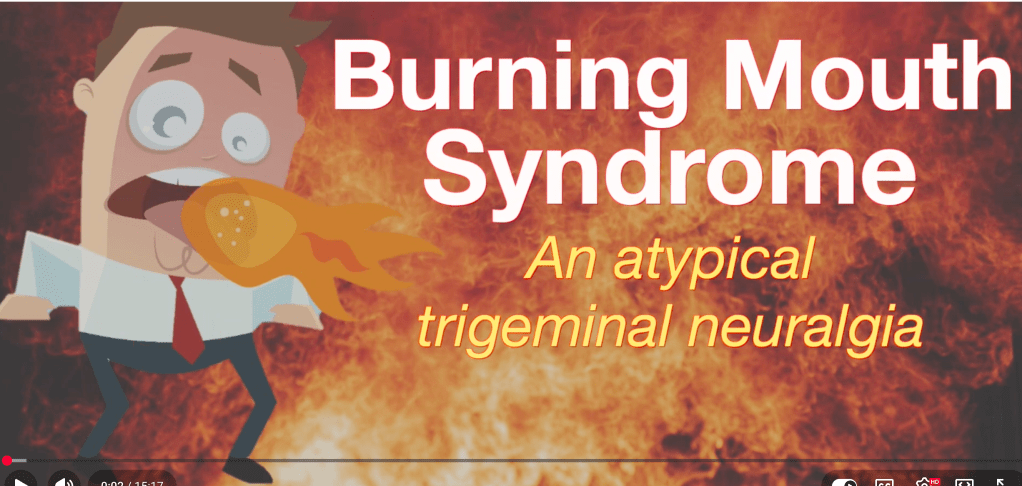
When this YouTube video was brought to my attention, I applied that same questioning attitude, and I must admit, between the somewhat monotone delivery of the doctor and the fact that I didn’t agree with everything he said, it was a bit of a slog. But I am glad that I stayed with it and heard about the connection between the cervical vertebrae and the multitude of major nerves that are affected by them.
I have tried chiropractic care in the past, and although it was pleasant and my Chiropractor was excellent, it did not relieve my pain to any large or lasting way. We did discover that I had a slight reversal in my cervical vertebrae, most likely caused by a minor case of whiplash in my 20s after being rear-ended.
This video highlighted the situation as a potential cause for irritation of multiple nerves, and the doctor recommended a series of exercises to both relax and minimize strain while strengthening the muscles in the neck area to better support proper posture and alignment.
Winter is here, and the furnace is on, the fireplace is lit, and maybe even a fire pit is burning outside at your house. Sounds so cozy, doesn’t it?
But the truth for Burning Mouth sufferers is that furnaces, fireplaces, and fire pits are no friends to us. They dry out the air, and some release particulates that can be irritating to our tissues and lungs. Dryness makes our Burning Mouth pain more intense, and even adding large amounts of water to our daily intake doesn’t make it “all better.’
So, what can we do?
Humidify!
Ensure you are using a clean humidifier with no mold or other residue; distilled water is always a good choice. Humidify your sleeping area, if nowhere else.
The New York Times ran an excellent article on how to make humidifiers work for you. It can be accessed at this gift article link:Click Here
Boiling a pot of water on the stove will put additional moisture in the air, but you must keep a close eye on it to avoid a burned pot.
Interested in learning more about Burning Mouth, the studies that have been done, and the science so far? Go to the Burning Mouth Support website at https://www.bms-support.org/and check out the Research page for links to the latest research we can find.
If you know of a study or research that has been done by a reputable source that is not listed there, just let me know in the comments, and I will forward that information to them.
Stay warm, stay hydrated, and take good care of yourself this winter.
As promised, here is an update on my Burning Mouth Journey and the latest thing I am trying.
You may remember my experience with Effexor XR/Venlafaxine and the muscular tic side effects that forced me to abandon it even though it had been very effective at reducing my burn to a tingle.
My primary Doctor suggested that I talk with my Neurologist about compounds similar to Effexor XR but that may have fewer side effects. My Neurologist listened, did some research, and we decided to try Cymbalta/Duloxetine at a very low dose and see if it made a difference. This was in addition to the Klonopin/Clonazepam ODT at .50 to 1 mg daily that I take to control the burning escalation.
I must admit that at 20 mg per day of Cymbalta/Duloxetine, I noticed no change at all. I passed this information back to my Neurologist and he prescribed 30 mg per day.
Recently, a reader in China asked an intriguing question. “Is there a diet for Burning Mouth Syndrome/Disorder?”
It was sad to tell him that there was no recommended diet that I knew about. However, there are some things that I have picked up over the years, both anecdotally and through personal experience, that I am better off avoiding.
I will share them here, but I also recommend keeping a pain diary. I have talked about this before, but when looking at potential irritants, intolerances, or allergies, it is of particular benefit!
If you are interested in learning more about pain diaries, there are resources on this blog that can help you. First, you must understand the pain scale and the ways it doesn’t really work for BMS Sufferers. Then, figure out what format works best for you and go to your next doctor visit armed with usable data, whether for diagnosis or continuing treatment.
Some basic tips for Burning Mouth Sufferers when it comes to food irritations:
Avoiding ultra-processed foods and sugars is always good, so definitely do that! In addition, here are some foods and other diet-related things that can be triggers for many people with BMS. 1. Intensely spicy foods. Go easy on the spice until you determine how much your sensitive mouth can handle. Many BMS sufferers are “super tasters” and react differently. 2. Sharp-edged snacks. Yes, I mean chips of all kinds, some nuts, and even pretzels can inflict little cuts in the mouth that aren’t very noticeable while you are eating but can give you a flare after the fact.
3. Chewing gum can help, but if it is sugared, you are bathing your drier than normal mouth with a sugar solution, and can lead to some dental challenges. I switched to Xylitol sweetened gum and perhaps you would like to try it. Xylitol makes your mouth very unfriendly to the bacteria that cause plaque, tartar, and gum recession but you do have to start small and work up to a complete change because Xylitol can cause loose stools until your body adjusts. 4. Low hydration levels. Our mouths hate being dry so consider yourself “putting out the fire” with frequent drinks, whether cold or hot, and in general, water is my go-to! 5. Suspicious that something might be problematic for you? Keep a pain log and you will begin to see a pattern of certain foods or activities that cause your pain to be more intense. Then you can not only moderate your intake or behaviors but you will also have data to share with your medical professional.
I look forward to hearing your experiences and recommendations and do check into the BMS Support Website for more coping strategies to help you in your Burning Mouth Journey.
As usual, when you look for research on Burning Mouth Syndrome or Disorder, you don’t find a great deal. When you do, it is often limited to very tiny numbers and scope and can be conflated with Trigeminal Neuralgia, Sjogren’s, and other syndromes that may have some symptoms in common with BMS.
But they are not BMS. There is no diagnostic tool, a blockable nerve, or specific medicines for BMS. There just isn’t.
We know statistically that the most affected group of BMS sufferers are older women. That is a fact.
We know statistically that many women who are affected are peri, pre-, or postmenopausal. That is a fact.
We know, too, that this correlation (Note that I do not say causation because that has never been proven.) has not served older women well. Often older women are shunted off into the “change of life” box in medicine and their complaints are not taken seriously.
The end of the year approaches and many of you are squeezing in those last yearly checkups. Don’t forget your teeth and mouth! I know that Burning Mouth can make dentist visits a bit more difficult but remember your mouth may be much drier than normal and dryness leads to more bacteria growth, which leads to decay.
Not kidding.
Saliva usually washes bacteria away as a natural process, but when there is less saliva, those bacteria can park and enjoy a picnic on your teeth. Decay, infection, abscess, gum recession, and disease can result and have you in a dentist’s chair longer and more often!
One strategy I have found to inhibit bacteria growth in my mouth is to use Xylitol (made from birch bark only) as my sweetener of choice. Click here for more information about Xylitol.
My personal strategy was to substitute Xylitol for my regular sweetener slowly. It can cause some side effects gastrically, so adding it gradually bypasses much of that reaction. I also gradually substituted Xylitol gum for my regular mouth-moistening chew.
I have written before about Effexor XR/Venlafaxine HCI, a medicine my Neurologist recommended since it is one of the few meds out there that I haven’t tried!
Up to now, the only thing that truly lessened my escalating burning neuralgia wasClonazepam ODT, and the side effect of that, as those of you who have tried it know well, is drowsiness.
I found over time that I could control the timing of my doses and coordinate caffeinated drinks (coffee in the morning, iced green tea until noon) to ward off daytime drowsiness. It was working okay and I was able to function. When flares arose (mostly after dental work of any kind) I could increase the dosage and the caffeine. Life was continuing to be workable.
Effexor XR/Venlafaxine HCI is an antidepressant, and my neurologist started me out with a minimal dose of 37.5 mg once a day. I had no discernible relief from it at that level, so we doubled the dosage to 75 mg once a day. At that level, I was experiencing some relief (The burning became more of a tingle that would intensify through the day until I took the minimum dose of Clonazepam ODT around dinner time.) but it wasn’t knocking the BMS out.
I have discussed the power of communication before when it comes to managing chronic pain. Realistic representation of your pain levels, educating new specialists about Burning Mouth Syndrome, and even sharing with family and friends about your condition; what helps…and what doesn’t.
We have discussed counseling and therapy and I highly recommend it if you can find and afford it. It will give you a listening ear from a professional who has “no skin in the game.” You cannot overwhelm them with your frustration and pain, or frighten them about your reactions to it. You cannot express any emotions that they have not seen before. They are required to have professional boundaries, and short of your expression of the intent to self-harm or harm others, they will actively listen and then give you some ideas of how to handle these emotions. It’s a gift you give yourself.
But, you say, “I can’t afford that.” Or, “I don’t want to open up to a stranger.”
We have covered a bit of this ground before, and again I urge you to communicate, take the rest (and medicines) you need, and use your coping strategies to get through the stress of the holidays.
Things have loosened up and you may be putting family events together, gathering to open gifts, and doing things you haven’t been able to do for a couple of years. It can be hard to get back into the swing of things.
Presents? Oh, don’t get me started! The logistics of getting everything to everyone with the uncertainty as to whether things will get there in time…






 A Burning Journey